
The 33
October 2010. Relieving a sick boss, three days without leaving the hill, the night they brought all of them out, and a decision made at the back door of a hospital.
They called me at three in the afternoon. Boris López, my boss, had been at the San José mine for a week and he was wrecked. Flu, no sleep, running an operation under conditions that could not hold much longer. Someone had to go up and relieve him.
I called Michelle and told her I was leaving for Copiapó. I stopped by the house and threw what I could into a backpack. I sorted out the flights myself on the way to the airport, on the phone with the network's travel agency. They wired me money and I left.
I got to Copiapó around eight at night. A driver took me straight to the mine. No hotel stop, no dropping the backpack anywhere. Straight up the hill.
I saw Boris at ten. You could see it in his face, in his body, in everything. A week in the desert, sick, sleeping badly, coordinating coverage that never stopped. I had brought him medicine from Santiago. I told him to go down to the hotel, that I would take over.
My colleagues had been broadcasting since five in the morning and they were spent. I told them I would take the night, that they should go rest. Boris went down to the hotel, the crew left, and I stayed on alone running the night operation.
By then we knew the miners were alive. The rescue was close but there was still no exact date. What there was, was tense waiting and a media deployment unlike anything I had seen in my life.
The hill
The mine sat in the middle of the desert, on a bare, dry hill. During the day the heat hit hard and the wind blew hot and full of dust. At night the opposite: a cold that went into your bones, parka and hat mandatory. Sometimes we walked over to the families' camps, where they kept fires going, and warmed up there with them for a while.
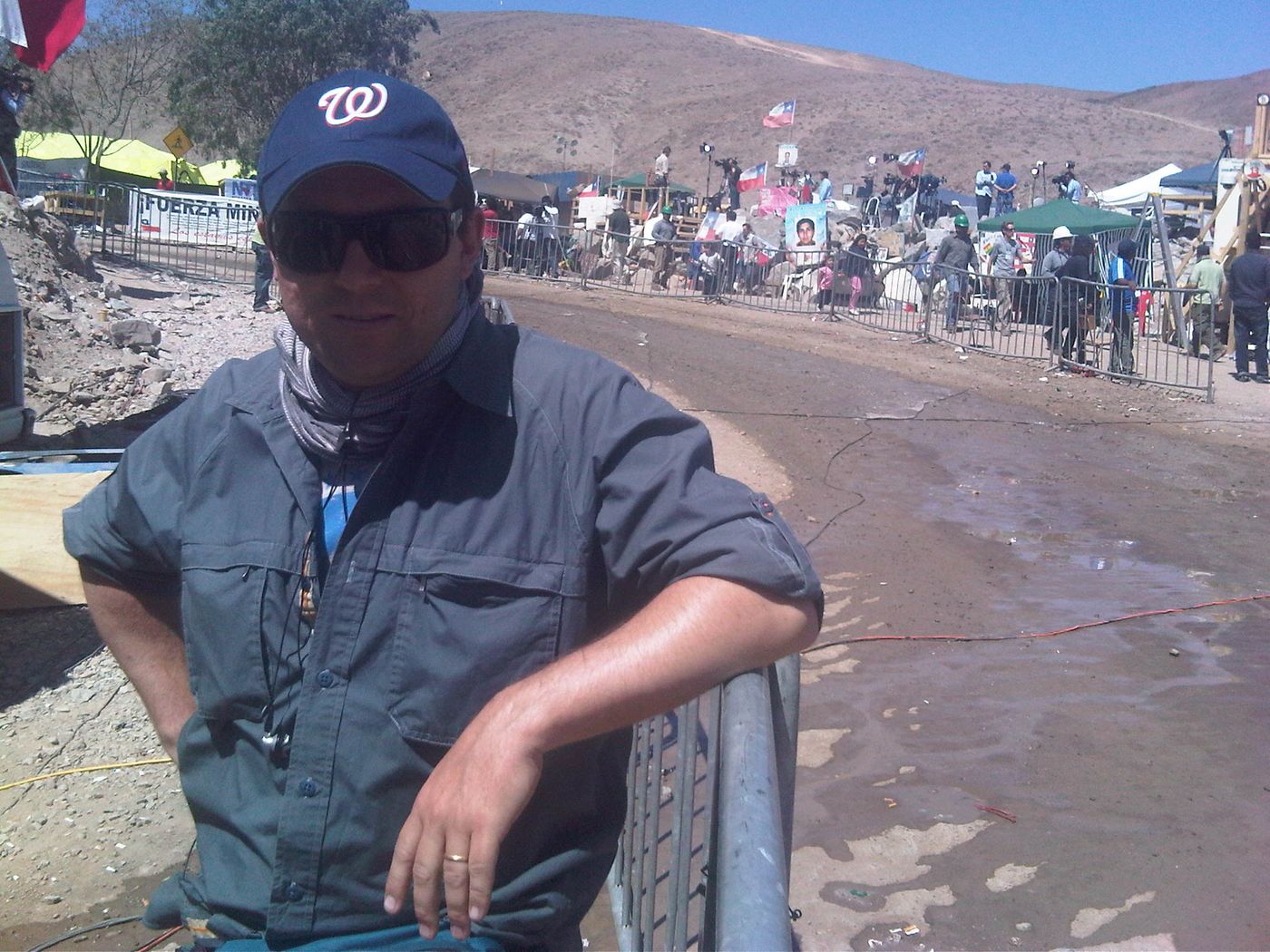
We had no access to the mine. There was a checkpoint, and past that only authorized personnel. You could hear the drills in the distance, a constant noise, but we never saw them. Everything reached us through official spokespeople or the television feed, the same as the rest of the world.
Our camp was far from the mine entrance. A motorhome, improvised tents, a few hotel rooms in Copiapó for when you could go down. I spent three days up there without coming down. Sleeping a few hours, eating sandwiches and crackers, drinking water. Dead time was for sleeping. The rest of the day you were moving, working.
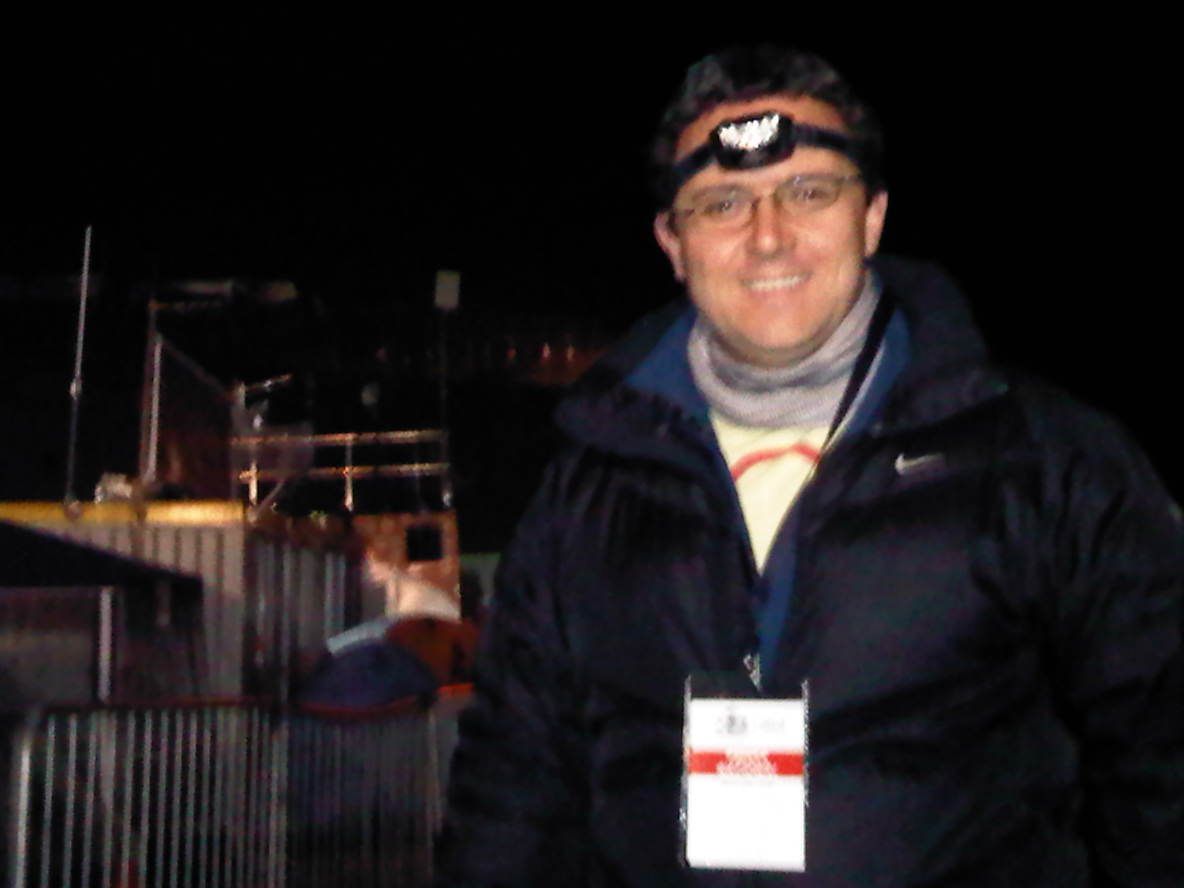
I helped a Japanese crew with a few things. I carried equipment to their broadcast position, introduced them to some spokespeople. When they left, they gave me two power generators. They could not take them back to Japan and handed them over as a thank-you. That gesture stayed with me: in the middle of coverage like that, with everyone tired and tense, someone takes the time to say thank you.
I had direct contact with the families, but I did not form bonds. I took the position of someone who was there to show the world what was happening, not to become part of the story. Politicians barely came near where we were. We saw President Piñera on television, always inside the restricted area.
The night of the rescue
We were outdoors, next to the families, watching the official feed on a television set. A fire going to hold off the cold. Crowds, and not only there. Since the order in which the miners would come out was already known, each family's camp drew an enormous crowd, mostly press. There was a real race between the networks to be exclusive with the relatives at the exact moment.
When the first one came out, the atmosphere changed. Shouting, tears, applause. Several of us cried.
What I felt was physical relief, like letting go of something that had been building for days. The dread of not knowing whether it would all work out released at once. All I wanted was for them to bring everyone out fast, so there was not the slightest chance of anything going wrong.
It was pure collective emotion. It was not a tragedy, it was the opposite. It came out of hope, out of that uncertainty of not knowing whether they were alive or dead, whether they could be brought out at all.
The back door
At dawn they told me to go down to the hospital in Copiapó. The miners were arriving by ambulance. I went down with Jorge Arellano, the truck operator, and Juan Pablo Amigo, his assistant.
When we got there, the main entrance was already packed with networks. I made a call: we went around to the back.
There was nobody there. We parked beside the door and set everything up, cables, cameras, lights. It was the right call. That was where the ambulances came in. That was where the action was. We did not have to ask permission, it was a public street, and the authorities understood the scale of what was happening. At five in the morning Gonzalo Ramírez, the reporter, arrived and we went on air.
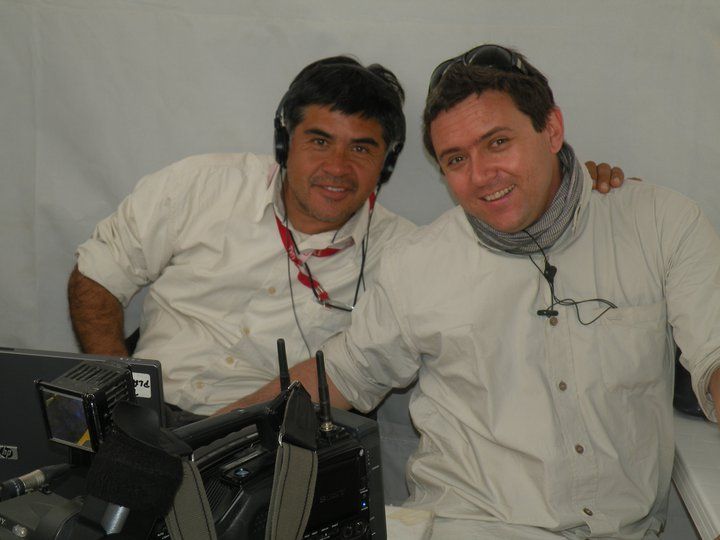
People outside cheered every miner who arrived. And they asked us for photos. Gonzalo, who was on television, but also me and the cameraman. We were nobody, but the euphoria was such that they wanted a photo with anyone connected to what was going on.
That first night at the hospital, after working from dawn until past eleven, they told me to rest. I had nowhere to go. No hotel. I had come down from the mine at three or four in the morning and had not stopped since.
Carlos Chávez offered me his room. Two beds. They tried to give me one and I said no, they were carrying a camera on their shoulder all day. I asked for pillows and a blanket. I lay down on the floor and fell asleep instantly.
I had gone about five days without a shower. What I did was put on deodorant and a bit of cologne. My hair was disgusting, and on top of that we had been at the mine, in dust and dirt. I set the alarm for five to shower before the shift. When it went off, I could not get up. I chose the extra thirty minutes. I brushed my teeth, washed my face, changed my shirt, my underwear, my socks. And went to work.
Agustina
Once the last miner was out and they had all passed through the hospital, the operation started winding down. Crews cut back. Around four in the afternoon Michelle called. She was with my mother. My niece had been born, Agustina, the first baby in the family, on October 15.
My boss gave me a choice: two more days, or a flight leaving in two hours. I did not think about it.
Rafa, a cameraman, drove me to the airport in a network car. On the way he tells me it has no fuel. I look at the dashboard: reserve light on. Middle of the desert.
I told him to keep going. A Chilevisión car was behind us, Rafa knew them, and he asked them to follow in case we got stranded. We made it to the airport. I asked the Chilevisión guys to escort Rafa back. He reached a gas station.
I got on the plane. My wife was waiting in Santiago. She drove me straight to the clinic.
I arrived filthy, covered in dirt, unshowered for days. All I wanted was to hold that newborn. The nurse looked at me and would not let me near her like that. Gloves, gown, cap, hand washing, sanitizer. And even then, she would not let me touch her. Only come close and look.
CCS Media is an audiovisual content production company led by Camilo Cuadra Sieveking, with more than 25 years of experience in television, media and corporate communications. We produce with artificial intelligence and also in the field, where the editorial judgment was built.
Let's talk about your project