Signal: how we built a space commercial from scratch with AI
A step-by-step breakdown of how we created a 28-second commercial for a fictional product. Concept, script, visuals, sound and motion graphics, entirely inside Runway.
The brief
The Runway Big Ad Contest had one rule: invent a product and make a 30-second commercial. No limits.
Simple on paper. Genuinely hard to execute well.
The trap with a brief like this is going too wide, chasing weirdness instead of comedy, spectacle instead of story. We wanted something that felt like a real commercial, not a tech demo. Something with a clear product, a clear joke, and a punchline that landed without a single word of explanation.
That meant starting with the product.
The product: JAUNT
We didn't invent JAUNT, it already existed as a concept. A beautiful portable wireless speaker, retro-modern design. Cream body. Red wordmark. Perforated circular grille. One red button. One black knob. The kind of object that looks like it belongs in a design museum.
Its tagline: "Give every moment its own soundtrack."
That line became the entire creative engine of the ad. We didn't want to change the product. We wanted to take the tagline completely literally, and push it somewhere absurd.
The concept: finding the joke
We developed five different concepts before finding the right direction. The key question wasn't what's funny, it was what's visually funny. Comedy that works without dialogue. Comedy that lands in any language.
The insight came when we asked ourselves: what is the most extreme version of "every moment"?
The answer was obvious. Space.
From there, the concept wrote itself. Two astronauts perform routine maintenance on a space station. Silence. Only breathing. And then, impossible funk, arriving from nowhere. They search. Earth. The Moon. The station. Nothing. And then they see it: the JAUNT, floating alone in deep space, spinning gently, its red indicator pulsing to the beat. They don't question it. They dance.
One location. Two characters. One product. Zero dialogue. Maximum absurdity.
The script: structure first
Before generating a single image, we locked the timed script.
| Timecode | Beat |
|---|---|
| 0:00 – 0:05 | Silence. Space station. Two astronauts working. Only breathing. |
| 0:05 – 0:09 | The funk drops. They stop. They look at each other. |
| 0:09 – 0:13 | They search. Earth, Moon, station. Nothing. |
| 0:13 – 0:17 | One shoulder starts moving on its own. The body betrays the mind. |
| 0:17 – 0:21 | They see it. The JAUNT, floating, small against the Moon. |
| 0:21 – 0:25 | They dance. Funk in zero gravity. |
| 0:25 – 0:28 | Product card. JAUNT. Tagline. Fade to black. |
The structural rule: the audio cut at 0:05 is the joke. Silence to funk, no warning, no fade, no build-up. That single audio cut carries the whole film. Everything else just has to stay out of the way.
Visual references: building the world
Before touching video, we generated four reference images to lock the visual language of the spot.
Reference 01 · The astronauts
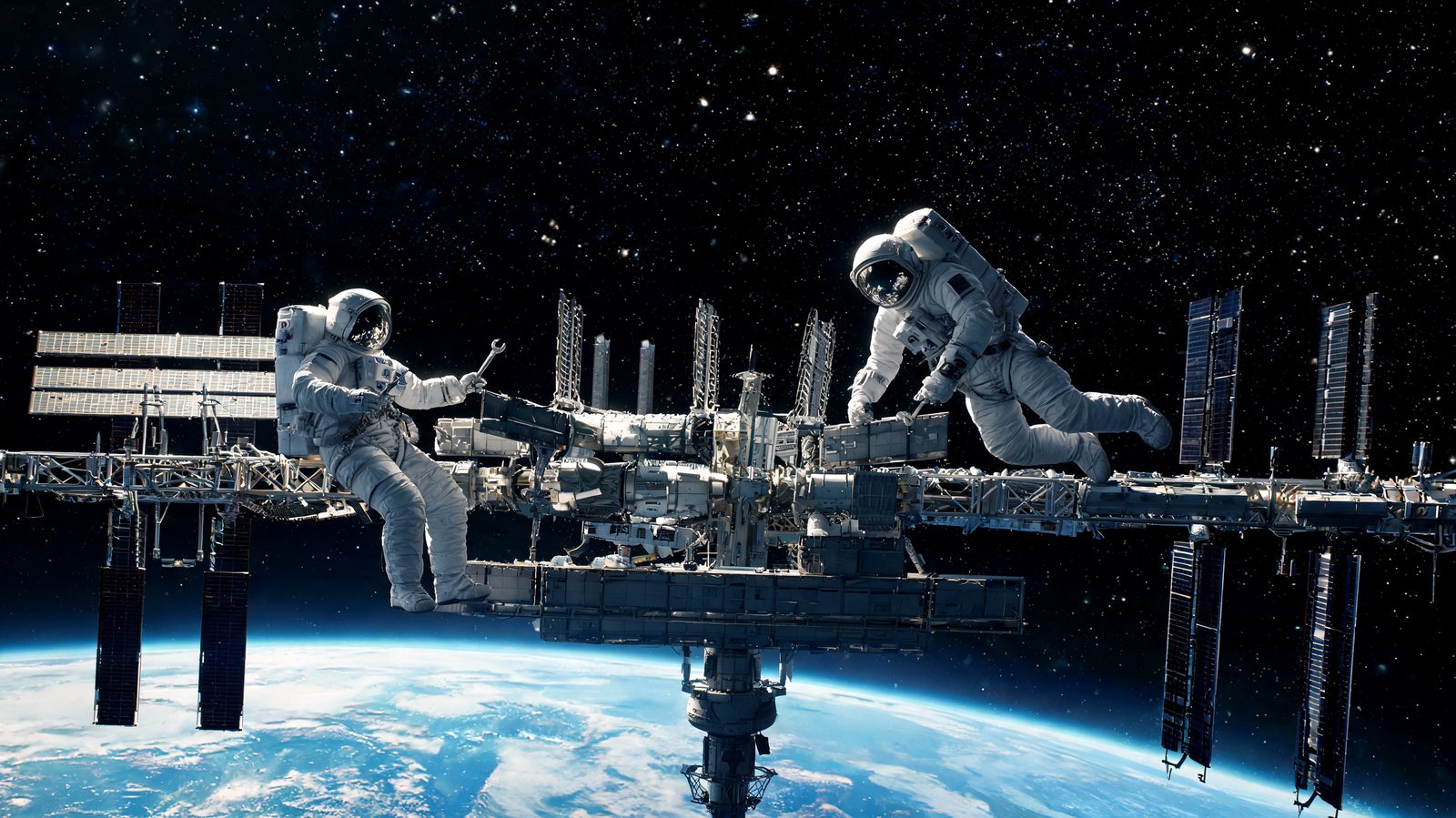
Two figures in full white space suits, reflective visors, working on the exterior of a space station. Earth below. Hard sunlight on the suits. Photorealistic, cinematic. This established the tone: NASA-serious, not sci-fi camp.
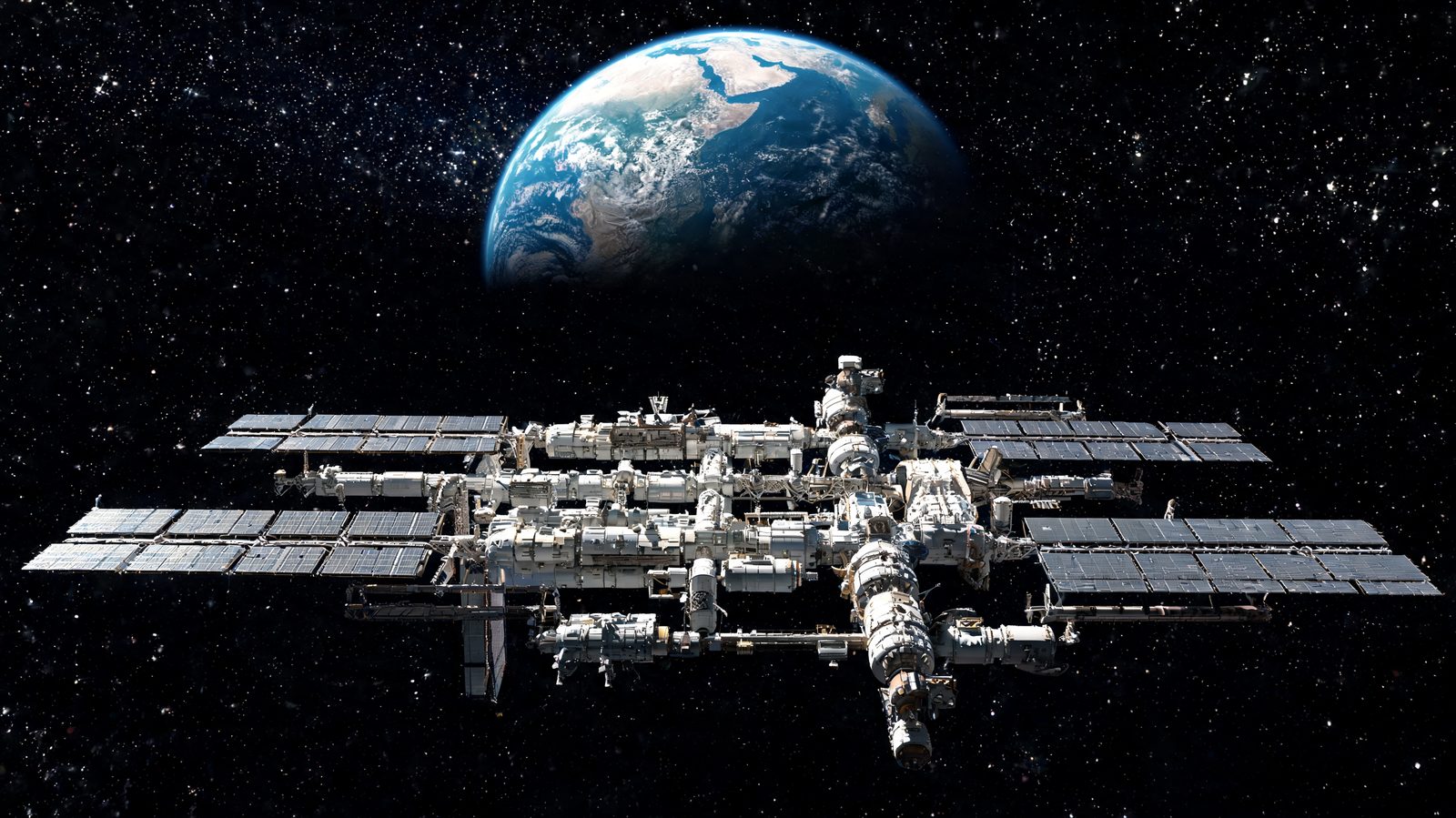
Reference 02 · The space station
Wide establishing shot. Solar panels extended. The blue curvature of Earth below. The world where the story lives.
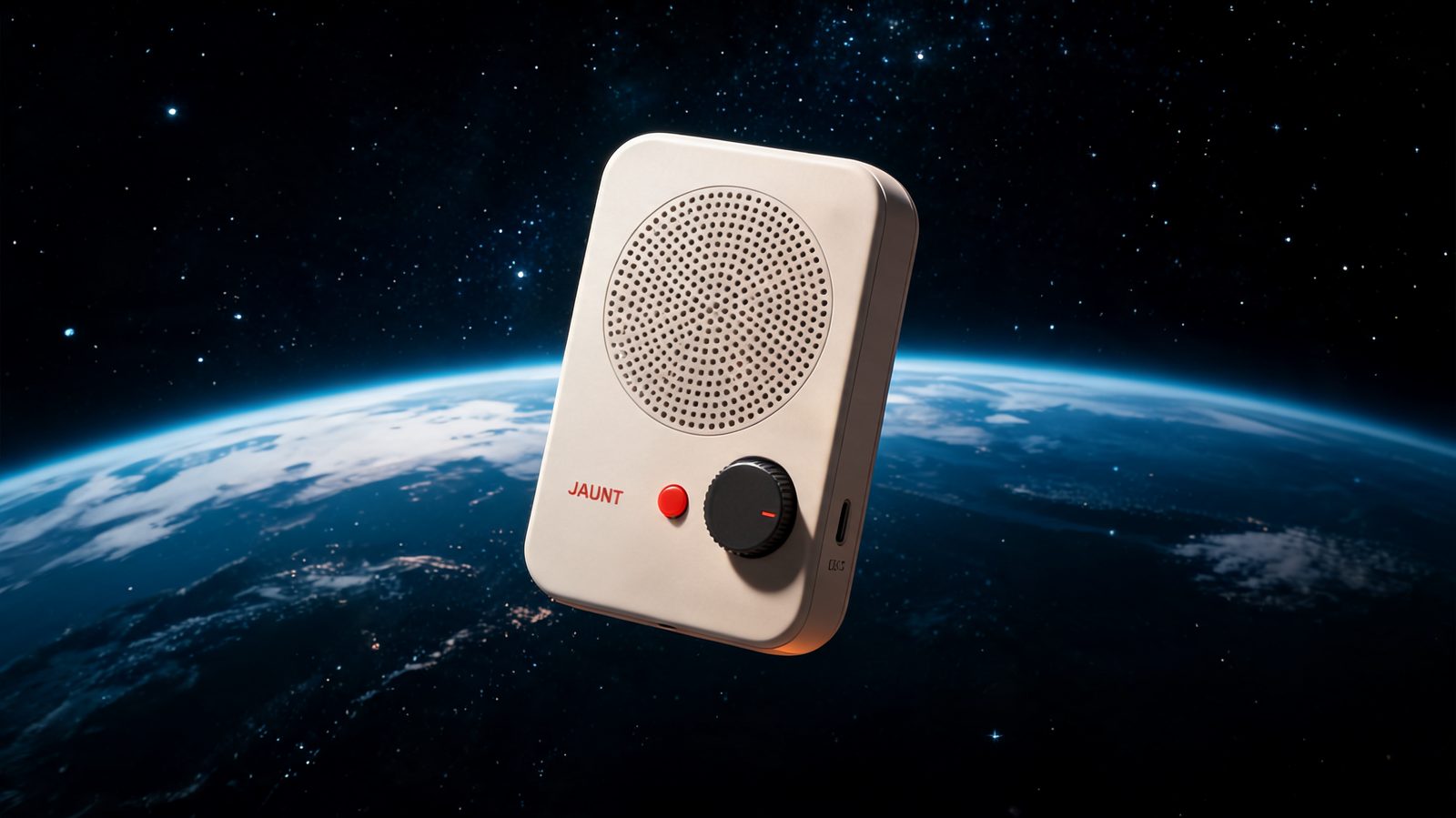
Reference 03 · The JAUNT in space
The hero image of the entire spot. The product floating alone in deep space, stars around it, distant Earth behind. Cream body catching sunlight. Red indicator glowing. Serene. Impossibly out of place.
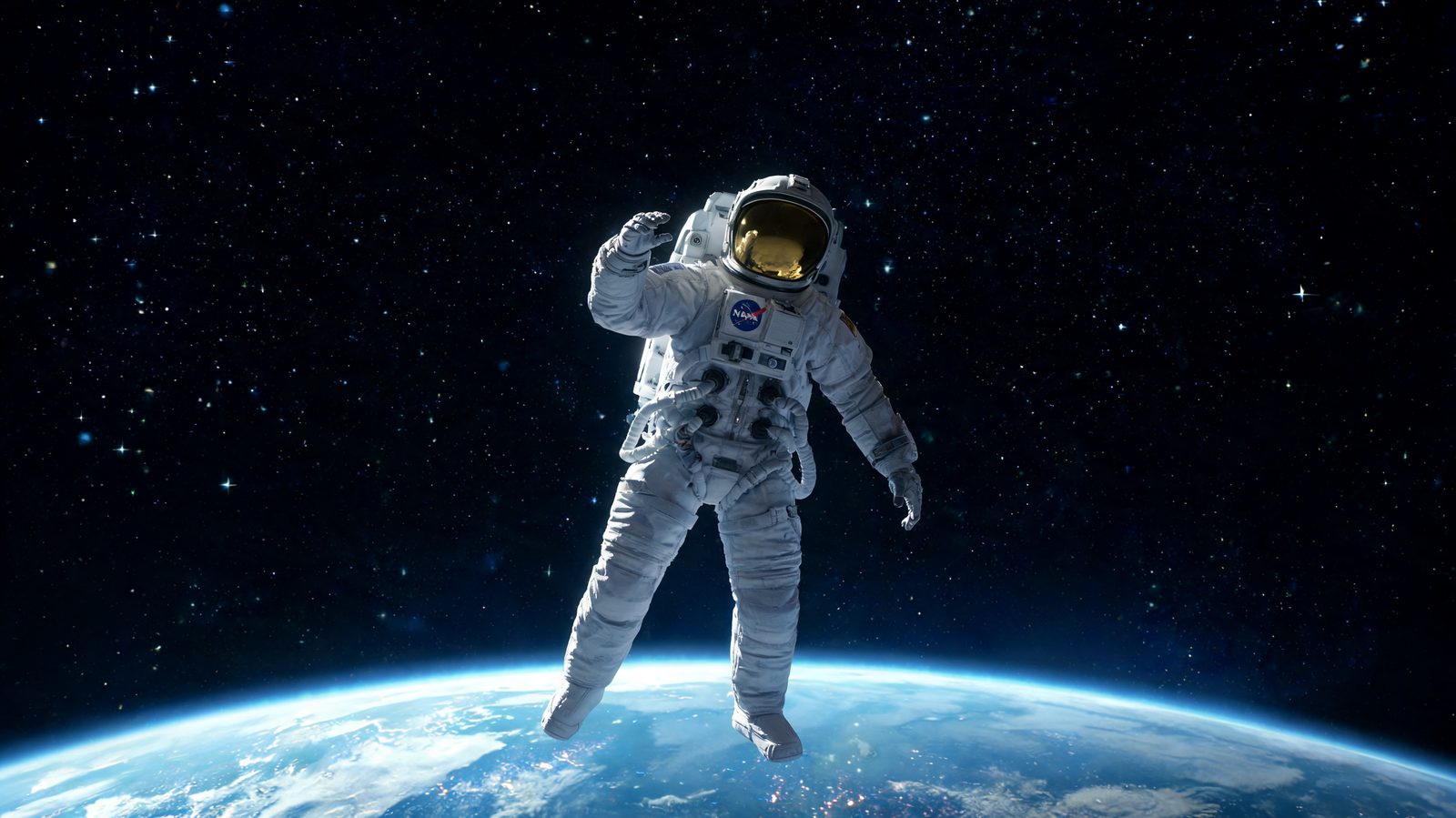
Reference 04 · The dancing astronaut
A single astronaut in zero gravity, body language suggesting movement. One shoulder raised, one arm up. Testing how expressive a body in a space suit can be with no visible face.
All four were generated using Runway's image tools with the real JAUNT product photos as references, locking the product look before producing a single frame of video.
Production: shot by shot
With the references approved, we generated nine video shots.
Sound design: the most important cut
All the comedy in this spot lives in a single audio cut.
Track 1 · Astronaut breathing
Two overlapping breathing rhythms, lightly processed through a comms system. The sound of isolation. Runs from 0:00 to roughly 0:13, the moment the JAUNT is revealed.
Track 2 · The funk
A warm, punchy seventies-style funk track. 100 BPM. Horns, bass, clean guitar. It starts with no build-up at all, no fade in, no warning. Just instant groove at full volume.
Motion graphic: the end card
The final element was an animated end card. Five seconds, minimal, black background.
The design: JAUNT in bold red type, the exact same red as the speaker's wordmark, the tagline in thin white below, the product centered at the bottom. Three elements. Maximum contrast. Zero decoration.
The animation: the speaker appears first, its red indicator pulsing once in the black void. Then the JAUNT wordmark stamps in from above, hard, with overshoot, and settles. The tagline unweaves letter by letter beneath it. The whole composition breathes.
The red of the wordmark and the red of the indicator are the same. When they share the frame, they connect. That was intentional.
What we learned
Simplicity is a competitive advantage
One location, two characters, one product, one joke. Everything else is execution. The tighter the concept, the more energy you can spend making each element excellent.
Sound design is direction
All the comedy in this spot lives in an audio cut, not a visual effect. In generative video production, sound is where you have the most control. Use it.
The product has to earn its place
JAUNT is not a prop in this commercial. It's the protagonist. Every creative decision, the silence, the search, the dance, exists to set up the moment the speaker appears. Remove the product and the story collapses. That's the test.
Generative video rewards clarity
The clearer and more specific your visual brief, the better the result. Vague prompts produce vague results. Treat every shot as a real cinematography decision, camera position, distance to subject, light direction, implied movement, and the models respond accordingly.
Tools used
Everything was created inside Runway:
- Image generation: visual references, style frames, product shots
- Video generation: the nine shots of the commercial
- Audio generation: space breathing and the funk track
- Motion graphics: animated end card
- Timeline and editing: final cut assembly
The result
"Signal." 28 seconds. A fictional product. Two dancing astronauts. And funk playing where no sound should exist.
JAUNT. Give every moment its own soundtrack.
Created entirely with Runway. Every frame, every sound, every motion graphic, generated with artificial intelligence and directed with intent. Submitted to the Runway Big Ad Contest, 2026.
CCS Media is an audiovisual content production company based in Santiago, Chile, led by Camilo Cuadra Sieveking, with more than 25 years of experience in television, media and corporate communications across Chile, Latin America and the United States. Field production credits include the 2010 Chile earthquake and tsunami, Haiti, the war in Ukraine, South Africa and the rescue of the 33 miners at the San José mine. We produce with AI, and we produce in the field, where the editorial judgment was built. We work in Spanish and English, worldwide.
Let's talk about your project