
What never aired from Haiti
January 2010. A night shift, one sentence from my boss, and a military plane loaded with humanitarian aid. What you see from behind the camera when your job is to look.
It was January 2010 and I was coming off the night shift at TVN, the one that runs from five in the morning to three in the afternoon and leaves your eyes dry and your body out of sync. I stopped by the office to drop some things off. Boris López, my boss, looked up at me from his desk with the calm of someone who made the decision before you walked in.
"Camilo, you have to go to Haiti. You leave today."
I asked what time. He said they were still looking at flights, that I should go home and pack, that we were leaving any minute.
Before I left I told him the one thing that had been turning over in my head since the earthquake footage started coming in from the wires. That I had never seen a dead body. That I did not know how I would react.
Boris was quiet for a moment.
I did not truly understand that sentence until weeks later, sitting in my living room, crying and unable to stop.
Getting in is half the job
We flew to Santo Domingo that same afternoon. There were three of us: Miguel Ángel Luna on reporting, Carlos Chávez on camera, and me producing. The borders were closed. There were no commercial flights to Port-au-Prince. Everything was on the ground, literally and otherwise.
The director of the Santo Domingo airport was Chilean and met us with real goodwill. Also with an offer: he had a helicopter, three thousand dollars per person. There were three of us. Nine thousand dollars. We did not have that money, and he knew it.
So we went to where the humanitarian aid was being staged. The UN, UNHCR, the Red Cross, rescue teams from half the world. We talked to everyone. Nobody could take us. The priority was saving lives, not moving journalists. We understood that completely and kept asking anyway, because that is the job.
That is where we met an Argentine with a rescue dog, in the same situation we were. At some point he got a seat on a humanitarian flight and we watched him take off from the apron, with his dog and his gear, unable to do anything about it.
Miguel Ángel and Carlos went down to shoot a piece on how the aid was being coordinated. I stayed with the bags. I went to find something to eat and a Spanish Air Force pilot came over. He had met my colleagues downstairs and wanted to know what we were doing there. I explained: we needed to get to Port-au-Prince to work, but also to meet up with Jean Pierre Salinas, another TVN cameraman who was already there and was alone.
He listened. He thought about it.
"Let me make a couple of calls."
He came back five minutes later: tomorrow at five in the morning, we pick you up, you fly with us.
The Hercules was loaded to the roof with food, medicine, water and tents. The pilots had that quiet energy of people who do difficult work without making theatre of it. They offered me coffee in cans you shake and they heat themselves. I had never seen anything like it. There I was, on my way to Port-au-Prince in a military aircraft full of humanitarian aid, drinking a cappuccino out of a can. Twenty minutes of flight, thirty at most.
The smell
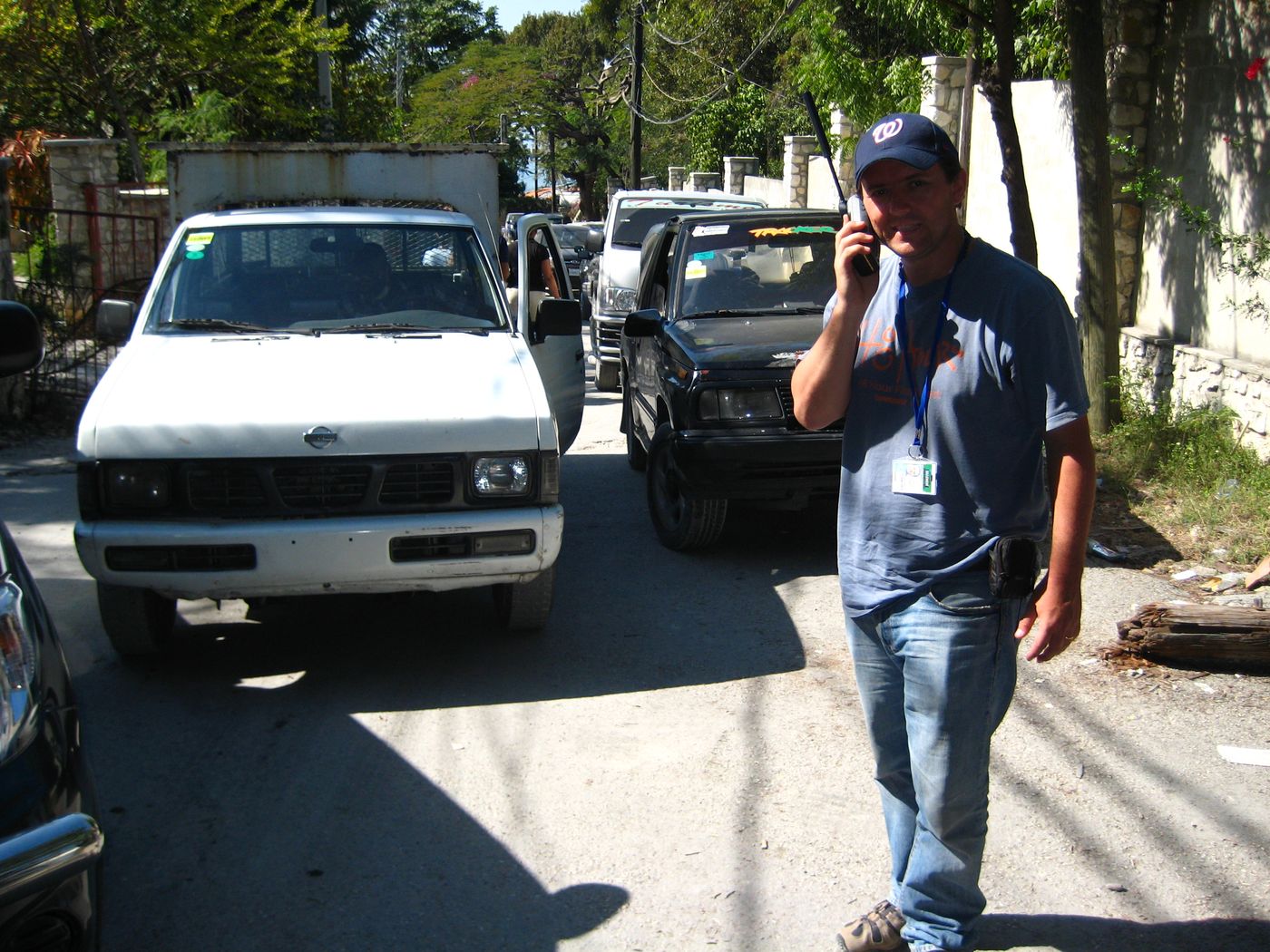
We came off the plane with the sun already hitting hard. To reach the parking area you had to cross through the airport building. There was no other way out.
And walking into that building, the smell arrived.
It was not gradual. It was a blow. Damp, heavy and sweet at the same time, it goes up your nose and does not let go. A mix of things the body recognises without anyone ever having taught it to.
In a side room there were bodies. Several. I do not know how many, I did not stop to count. Outside, Black Hawks guarded the runway and there were marines everywhere. And at the airport fence, a tide of people pushing, shouting, looking for a plane that would get them out of the country.
We found a car. It was not a taxi: it was a person with a vehicle and some petrol trying to work in the middle of a disaster. Between hand signals and some very rusty French I had kept from somewhere in school, we agreed on fifty dollars to take the three of us to the Chilean base.
When we arrived I handed over the fifty dollars and the man started shouting. He was claiming fifty per person. I had understood fifty for the group. A translation problem in a language neither of us spoke. A Chilean soldier came over and told him to leave.
Once we were inside I heard him shout one last time. He shouted "Chile" and drew his thumb across his throat.
That was my welcome to Haiti.
The afternoons
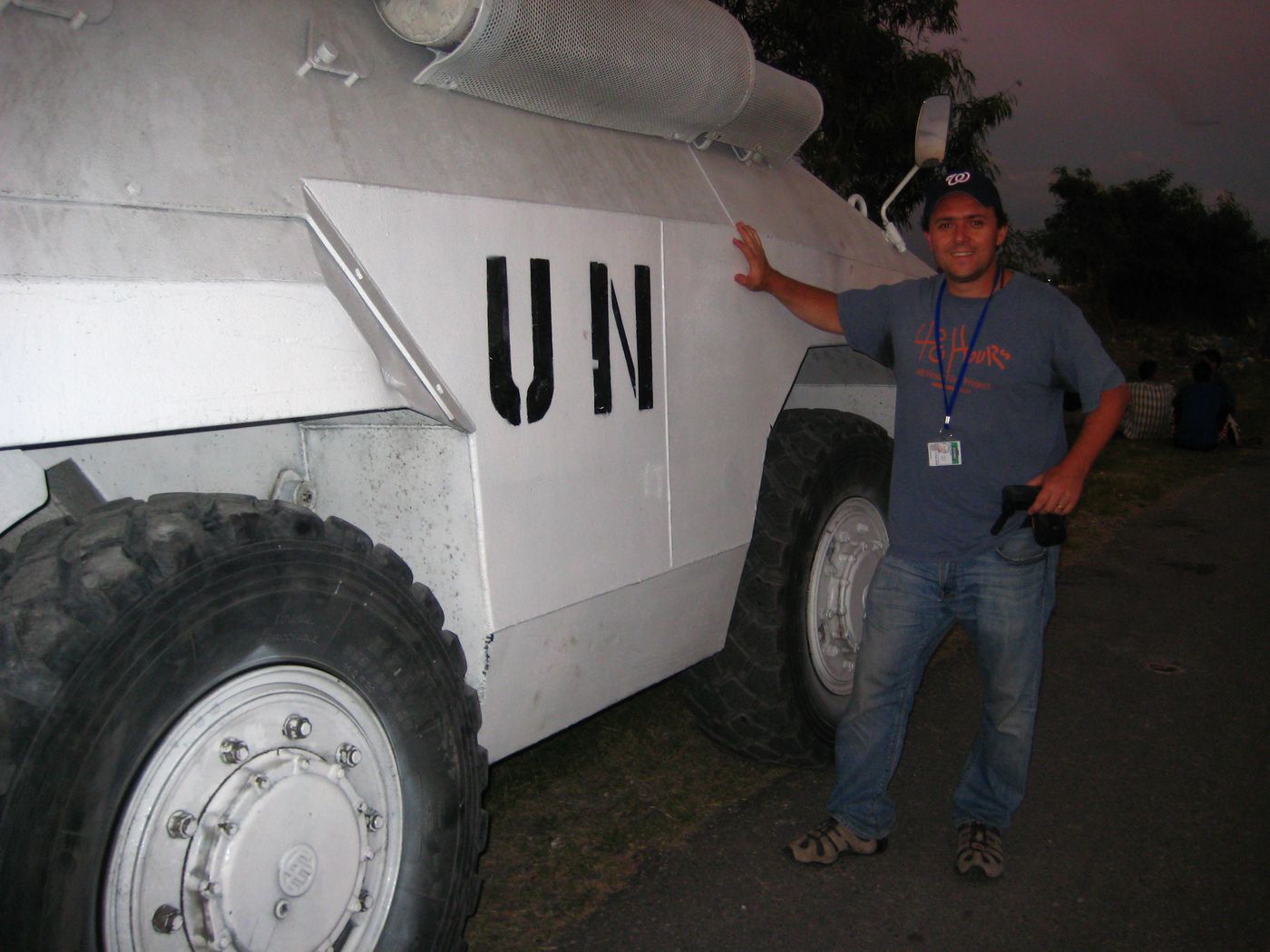
The first nights we slept on gym mats under a decommissioned military aircraft. We learned quickly that when a UN helicopter started its engines, the exhaust pointed exactly at where we were sleeping. A gust of heat and fumes would hit you and wake you up. You do not get used to it, you simply keep sleeping, because exhaustion wins.
One night a dog got in, took one of Carlos's shoes and left it in the middle of the runway, where we had no access. We had to shout at the soldiers to go get it. I remember that scene vividly, and I think it is because involuntary humour was one of the few pressure valves we had.
The work was another matter. I spent much of my time with Carlos in what had been one of the most elegant hotels in Port-au-Prince, now a pile of rubble. General Toro's wife had died there. We filmed the rescue attempts, we talked with him, with his son, with the rescue workers. Slow, quiet, heavy work.
On the first day we had gone downtown, to the collapsed Presidential Palace. The seat of a country's power, on the ground. Across from it, a park turned into a displacement camp, with tents built from tarps and bedsheets, and children bathing in improvised pools with water nobody would have wanted to touch.
At some point I saw an AP photographer run past, covered in blood. He had been attacked for his equipment and they were still chasing him. That is when I understood something I had not fully understood before: we were not journalists with credentials and a right to be there. We were strangers with cameras at the worst moment of many people's lives. From that day on we always moved close to some authority, at a distance, without going where we were not called.
And every afternoon, in front of the base, there was a ceremony. They brought out wooden coffins, some draped with their countries' flags. International staff who had come to help and were leaving in a box. Soldiers at attention, bands, short speeches. Ten coffins. Fifteen coffins. Every day.
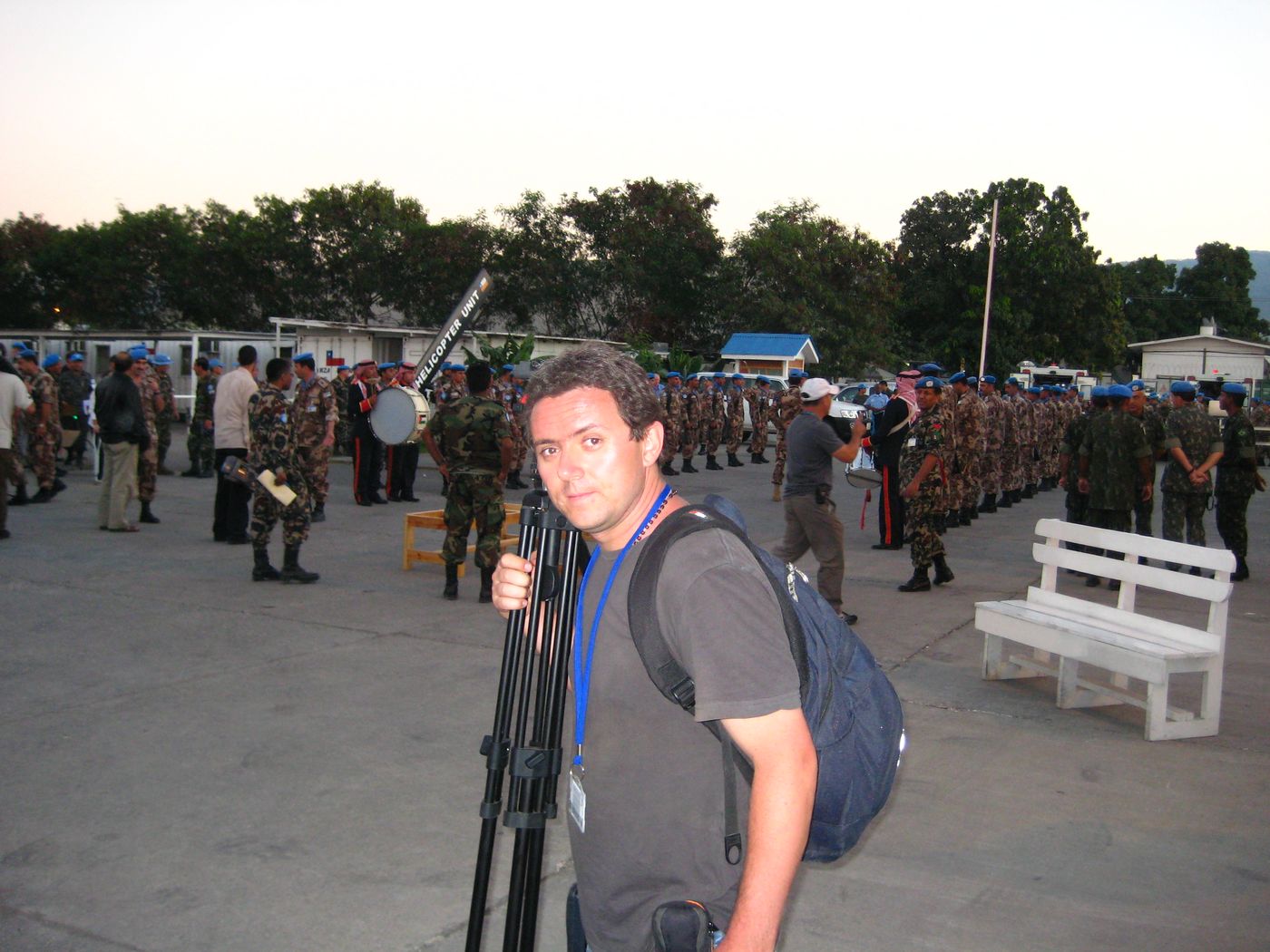
At night the Chilean journalists would gather. We talked little, there was not much to say because we had all seen the same things. Someone would turn up with a bottle of rum from the black market and we would pour a drink, not to get drunk but to bring down something that would not come down any other way.
I spoke to my wife by satellite phone every day or two. Short calls, to say I was fine. Nothing more. The words to describe what I was seeing did not exist yet.
The bill arrives later
We came back because the general needed the space: a battalion was arriving with medical staff and rescue workers. On the same flight they came down on, we went up.
I got home on a Sunday at midday. I took the clothes out of my bag to wash, showered, sat on the sofa and turned on the television. The midday news was showing the plane arriving. There we were: the press teams and the Haitian refugees Chile had given asylum to, coming off the plane at Santiago airport. I watched myself walking with my bag over my shoulder.
And that is when I broke. It was not controlled crying. It was everything I had held in over those weeks coming out at once. My wife sat down next to me and held me in silence. She said nothing. There was no need.
It was the guilt of the one who comes back. Having been somewhere people lost everything, and returning to a house with hot water, food in the fridge and someone waiting for you. Those two realities existed at the same time, six hundred kilometres apart, and the gap was too wide to process all at once.
Only then did I understand Boris. Observe, report, and leave the emotions for later. Not forever. For later.
CCS Media is an audiovisual content production company led by Camilo Cuadra Sieveking, with more than 25 years of experience in television, media and corporate communications. We produce with artificial intelligence and also in the field, where the editorial judgment was built.
Let's talk about your project